
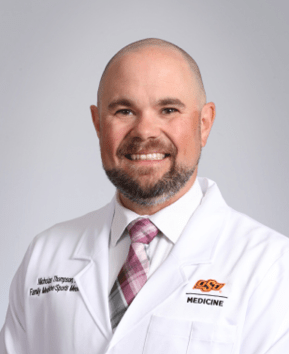
Physician Spotlight:
Learn more about Nick Thompson, DO
Dr. Nick Thompson believes movement is medicine. As a primary care sports medicine physician, he combines family medicine and musculoskeletal expertise to help patients stay active, recover from injuries, and maintain long-term health. We asked Dr. Thompson to share more about his approach to care, what inspires him as a physician, and what patients can expect when they visit.
What inspired you to become a physician and choose your specialty?
What inspired me to become a physician was the opportunity to make a meaningful, tangible difference in people’s lives. Medicine allows you to help someone in moments that truly matter, whether that’s guiding them through illness, helping them recover from injury, or simply giving reassurance and clarity.
I chose Family Medicine because I value relationships and continuity. I wanted to care for the whole person, kids, adults, athletes, weekend warriors, and aging patients, and to be someone families could trust.
Sports Medicine was a natural extension of that. I’ve always appreciated the role movement plays in health, identity, and confidence. Injuries don’t just affect the body, they affect mental health, routine, and community. Being able to help someone return to sport, stay active, or avoid surgery is incredibly rewarding.
How would you describe your approach to caring for patients?
I’d describe my approach as relationship-driven, practical, and focused on long-term health. As a sports medicine and primary care physician, I emphasize keeping people active. My goal isn’t just symptom relief; it’s helping patients maintain strength, mobility, and independence over time. Ultimately, I want patients to feel heard, informed, and confident in their care.
What can patients expect during their first visit with you?
During a first visit, patients can expect a thorough but comfortable experience focused on understanding them, not just their chart.
We will spend time talking. I want to hear your story in your own words, what brought you in, what you’ve tried, and what your goals are. If it’s a primary care visit, we’ll review your medical history, medications, lifestyle, and preventive care needs. If it’s a sports or injury visit, we’ll dive into the mechanism of injury, training habits, and what “getting better” looks like for you.
What makes your practice style unique?
I think what makes my practice style unique is the blend of comprehensive primary care and hands-on sports medicine, paired with a strong emphasis on prevention.
I don’t just treat injuries, and I don’t just manage chronic disease. I look at how everything connects. A patient may come in for knee pain, but we’re also talking about strength, mobility, weight management, sleep, and long-term joint health. Someone may come in for diabetes, and we’re discussing movement patterns, muscle mass, and staying active for decades to come.
I also feel that it is important to have clear communication. I try to explain things in a way that’s straightforward and actionable. Patients should understand their condition and feel confident in the plan, not overwhelmed.
What are your primary clinical areas of focus ?
Being a primary care sports medicine physician I have a wide range of expertise. While I can provide all the care that your family physician can ranging from managing chronic diseases to focusing on prevention, I also treat musculoskeletal and sports-related injuries including:
- Knee pain (meniscus injuries, arthritis, patellofemoral pain)
- Shoulder pain (rotator cuff pathology, labral injuries)
- Ankle sprains
- Tendinopathies (Achilles, patellar, lateral epicondylitis)
- Low back pain
- Stress fractures
- Concussions
- Overuse injuries in runners and youth athletes
- Non-operative treatment options
- I also frequently perform procedures such as ultrasound-guided injections, joint aspirations, and regenerative treatments when appropriate.
What is one piece of health advice you wish all patients would follow?
Prioritize movement. Not perfection. Not a 90-minute gym session. Just consistent daily movement. Walk. Lift something. Stretch. Play with your kids. Do squats while brushing your teeth. It doesn’t matter as much what, it matters that it happens regularly.
What do you enjoy doing outside of work?
Outside of work, I really value time that’s active and time that’s relational.
I enjoy staying active, things like golf, pickleball, getting outside, and just moving. There’s something grounding about being outdoors and competing a little, even if it’s just friendly competition. It keeps me balanced and reminds me why I encourage patients to stay active, too.
I also love spending time with my family. Whether it’s traveling, going to sporting events, or snow skiing, those moments matter most. I also enjoy coaching my kids’ sports teams, helping with homework, and planning trips together.
Do you have a favorite quote or personal motto?
Movement is Medicine
Are there any new treatments or technologies in your field that excite you?
Advances in musculoskeletal ultrasound have been particularly exciting in sports medicine. Ultrasound allows for real-time diagnosis and more precise, ultrasound-guided procedures, which can improve accuracy and outcomes for injections and other treatments. I’m also encouraged by the growing emphasis on regenerative medicine and biologic therapies, as well as improved approaches to injury prevention, rehabilitation, and return-to-play strategies that help patients recover safely and stay active.
Are you involved in research, teaching, or academic initiatives?
Yes. I’m actively involved in teaching and academic initiatives, working with medical students and residents. I also participate in academic and program development efforts related to sports medicine and osteopathic medical education including being a table trainer for the Osteopathic Manipulation course for 1st and 2nd year medical students.
What emerging trends or innovations in your specialty do you believe will impact patient care in the coming years?
In sports medicine, several emerging trends are likely to significantly impact patient care, including advances in musculoskeletal ultrasound, biologic and regenerative therapies. Artificial intelligence (AI) is also beginning to play a role in areas such as imaging interpretation, injury risk prediction, and personalized rehabilitation programs. Together, these innovations are helping move the field toward more precise, individualized, and non-operative treatment options that allow patients to recover more effectively and stay active.
Dr. Thompson cares for patients at these locations:
OSU Family, Internal, and Sports Medicine – Riverside
9645 Riverside Parkway Unit C, Tulsa
918-209-5170
OSU Orthopedics & Sports Medicine
744 W. 9th St. #100, Tulsa
918-631-8877